Course topics
Preliminary course program (subject to change). Gray text:
planned topics; black text: final topics.| Lesson |
Date |
Topics |
Slides and useful links |
Hours (total) |
| 1 |
24/09/2025 |
Introduction to the course, general
overview of gravitational-wave research. Review of SR and notation. The Ives and Stilwell experiment. |
Handout: Notation and SR topics | 2 |
| 2 |
25/09/2025 | The GZK cutoff. Introduction to General Relativity (1). Riemann manifolds and curved spaces. Tensors. |
|
4 |
| 3 |
26/09/2025 | Introduction to General Relativity (2).
More on tensors. The equivalence principle and the curvature of space. Tidal forces. The Roche limit. |
Slides on tidal disruption events. |
5 |
| 4 |
1/10/2025 | Introduction to General Relativity (3). Riemann manifolds and curved spaces - Christoffel symbols, covariant derivative, parallel transpor. Worked example on the connection coefficients. |
|
7 |
| 5 |
2/10/2025 | Introduction to General Relativity (4).
Connection coefficients on the sphere. Geodesic
equations. Geodesic equations from the free-particle
Lagrangian (ctd.). Equivalence between the two forms of
geodesic equations. |
Handout: Geodesic equations. | 9 |
| 6 |
3/10/2025 | Introduction to General Relativity (5).
Calculation of the connection coefficients and of the
geodesics on the surface of a sphere in 3D flat space.
Parallel transport. The equation of parallel transport. |
Handout: Worked example
of calculation of the connection coefficients and of
the geodesics. |
10 |
| 7 |
8/10/2025 | Introduction to General Relativity (6).
The Riemann curvature tensor, the Ricci tensor, the
Ricci scalar. Symmetries of the Riemann and of the Ricci tensors. Ricci tensor on the surface of the sphere in 3D space. |
Handouts: The Riemann tensor;
Sign
conventions; Symmetries
of the Riemann and Ricci tensors; Ricci
tensor on the surface of the sphere in 3D space. |
12 |
| 8 |
9/10/2025 | Introduction to General Relativity (7). Number of independent components of the Riemann and Ricci tensors. Geodesic deviation. Key principles of GR: principle of general covariance; principle of consistency; equivalence principle. Experimental tests of the weak equivalence principle. |
Handouts: Independent
components or Riemann and Ricci tensors; Geodesic
deviation. Slides on key principles of GR |
14 |
| 9 |
10/10/2025 |
Introduction to General Relativity (8).
The stress-energy tensor. The Einstein equations. |
Handouts: The
stress-energy tensor; Einstein's
equations. |
15 |
| 10 |
15/10/2025 | A short history of gravitational waves
and GR research. |
Slides
on the history of gravitational waves Link to P. Saulson's presentation of Pirani's contribution |
17 |
| 11 |
16/10/2025 | A short history of gravitational waves
and GR research (ctd.). The Newtonian limit. |
Slides
on the history of gravitational waves Handout: Newtonian limit. |
19 |
| 12 |
17/10/2025 |
Linearized gravity. | Handout: Linearized gravity. | 20 |
| 13 |
22/10/2025 | Gravitational waves
(GW) in GR: the tranverse-traceless (TT) gauge.
Gravitational wave polarization. |
Handout: The TT gauge and the
detection of gravitational waves. |
22 |
| 14 |
23/10/2025 | Interferometric detection of gravitational waves (1): the Michelson interferometer as basic scheme. LASER beam modulation and sidebands. Schnupp asymmetry. | Handout: Reflection and
transmission coefficients. Slides on the interferometric detection of gravitational waves Marco Kraans' short movie on the working principles of a GW interferometer. Paper introducing GW interferometers |
24 |
| 15 |
24/10/2025 | Interferometric detection of
gravitational waves (2): Schnupp asymmetry (ctd.) |
Slides
on the interferometric detection of gravitational
waves |
25 |
| 16 |
29/10/2025 | Interferometric detection of
gravitational waves (3): fundamentals of Fabry-Perot
resonators; matrix optics;optical stability of
Fabry-Perot resonators. |
Slides
on the interferometric detection of gravitational
waves |
27 |
| 17 |
30/10/2025 | Interferometric detection of
gravitational waves (4): transfer function of the
Michelson interferometer with FP arms; power recycling.
Overview of further optical improvements. Generation of gravitational waves |
Slides
on the interferometric detection of gravitational
waves Handouts: Generation of gravitational waves |
29 |
| 18 |
31/10/2025 | Generation of gravitational waves, the
quadrupole formula and some of its consequences.
Gravitational waves produced by simple configurations of
moving masses. |
Handouts: Generation of
gravitational waves. |
30 |
| 19 |
5/11/2025 | The stress-energy tensor of GWs and the
energy flux. Calculation of the Ricci tensor of
GWs. Compact binary coalescences. History of the quadrupole formula. PSR1913+16. Total power emitted by a GW source. |
Handouts: The GW stress-energy
tensor in the TT gauge; T.A. Moore's
diagonal metric worksheet; The TT-metric GW worksheet; History of the quadrupole formula; Total emitted GW power. Slides on PSR1913+16. |
32 |
| 20 |
6/11/2025 | Total power emitted by a GW source.
(ctd.). The Newtonian approximation for compact binary
systems. The GW150914 detection paper. |
Handouts: Total emitted GW power;
Compact binary
coalescences in the Newtonian approximation. The first detection paper. Commentary by E. Berti. |
34 |
| 21 |
7/11/2025 | The Newtonian approximation for compact
binary systems (ctd.) The physics of the black hole
merger GW150914. The post-Newtonian approximation. |
Handouts: Compact binary coalescences
in the Newtonian approximation; post-Newtonian
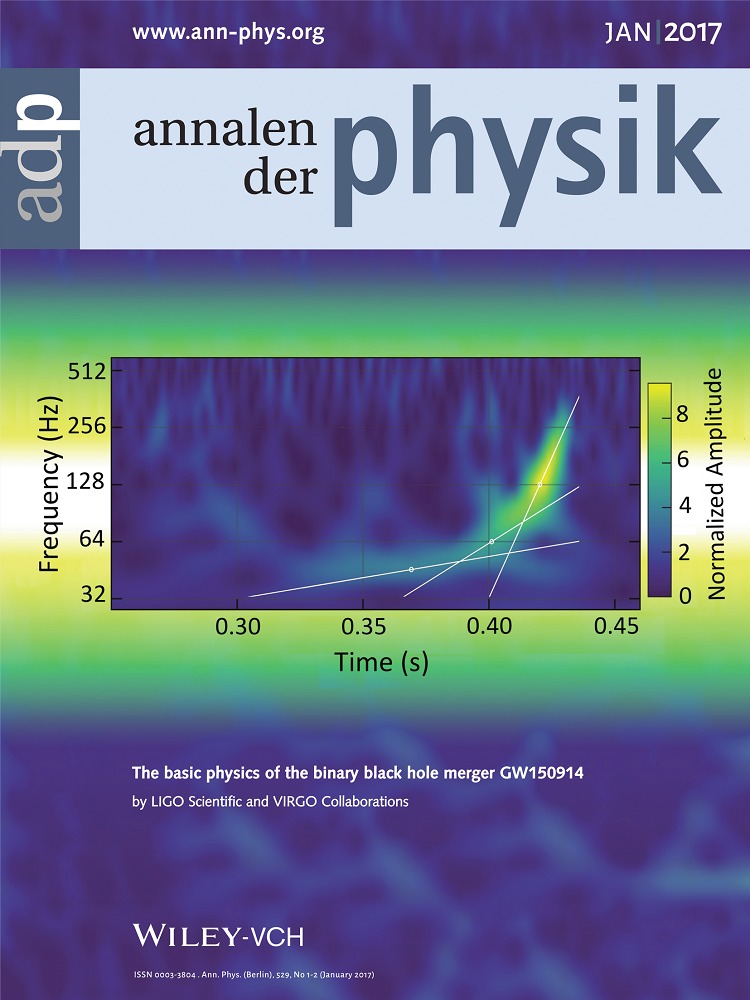
approximation. Paper on the basic physics of the black hole merger GW150914 + Cover + Chandra page on RX J0806.3+1527 |
35 |
| 22 |
19/11/2025 | Basic concepts on noise sources and the
sensitivity of gravitational wave detectors.
Introduction to the theory of thermal noises. The Langevin stochastic equation and the Fluctuation-Dissipation theorem. Application of the theory of thermal noises to mechanical oscillators. Antenna patterns. |
Handouts: Noise sources;
Antenna
patterns. |
37 |
| 23 |
20/11/2025 | Antenna patterns (ctd.). Antenna patterns
for a triangular detector configuration. Introduction to the analysis of GW signals. Convolution theorem. Wiener-Kintchine theorem. |
Handouts: Antenna
patterns; Antenna
patterns for a triangular configuration; Matched filters.
|
39 |
| 24 |
21/11/2025 | Matched filters. |
Handouts: Matched filters. |
40 |
| 25 |
26/11/2025 | Matched filters (ctd.). Signal-to-Noise
Ratio. Excess power methods. Antenna patterns in the context of GW signal analysis. The Open GW Data Workshop (presentation by Prof. Agata Trovato) |
Handouts: Matched filters;
Signal-to-Noise Ratio;
Excess power
methods; Antenna
patterns 2. Link to the GWOSC (Gravitational Wave Open Science Center) website. |
42 |
| 26 |
27/11/2025 |
Antenna patterns in the context of GW
signal analysis (ctd.). GW sources (1): BBH, BNS, NSBH mergers; continuous wave sources; neutron stars. |
Handout:
Antenna
patterns 2. Slides on GW sources. |
44 |
| 27 |
3/12/2025 |
GW sources (2): the stochastic GW backround. Core-collapse supernovae (CCSN). Coalescences of neutron star binaries and kilonova events. The first BNS event: GW170817 and the birth of multimessenger astronomy with gravitational waves. | Slides
on GW sources Slides on GW170817 |
46 |
| 28 |
4/12/2025 |
The first BNS event: GW170817 and the
birth of multimessenger astronomy with gravitational
waves. (ctd.). Exotic sources. The False Alarm Rate (FAR). Non-Gaussian noise, glitches. Mathematica Package for GR calculations. |
Handouts: Note on
the Li and Paczinski paper; Exotic sources;
The False Alarm Rate. Slides on GW170817 Link to the paper by Li and Paczinski. Links to GravitySpy and GWitchHunters Introductory slides on the Mathematica Package Mathematica Package for GR calculations. |
48 |